Digital Transformation in Sub-Saharan African Higher Education
CLIENT:
British Council
Project Overview
The British Council commissioned EyeCity Africa to carry out research on digital transformation in higher education in Sub-Saharan Africa, across Ghana, Kenya, Nigeria and South Africa.
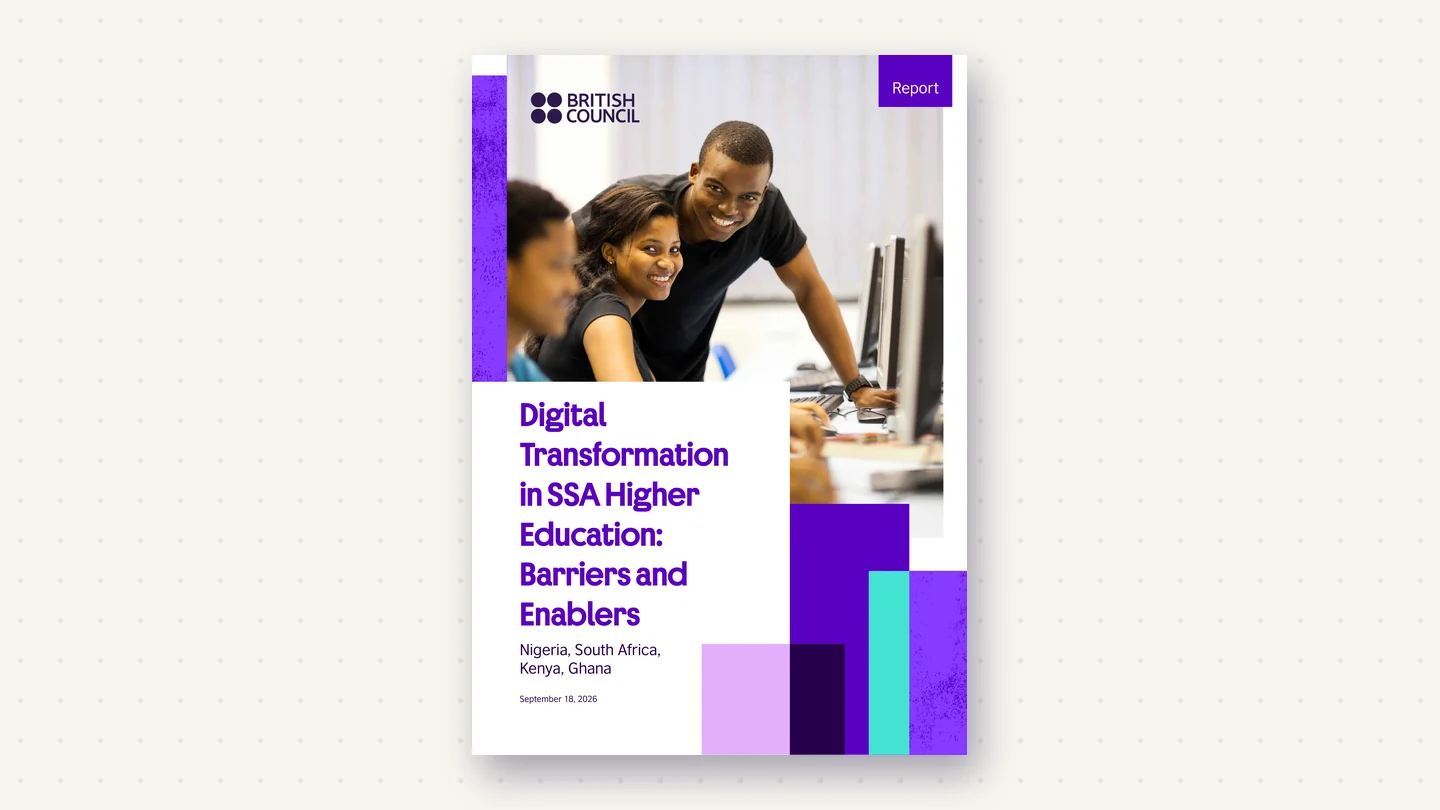
The study set out to understand how far universities have come in adopting digital technology, what is holding them back, and what will help them go further. Its findings are published in the report Digital Transformation in SSA Higher Education: Barriers and Enablers, which was launched at a virtual stakeholder dialogue on 29 October 2026.
Project Structure
Research Design and Data Collection
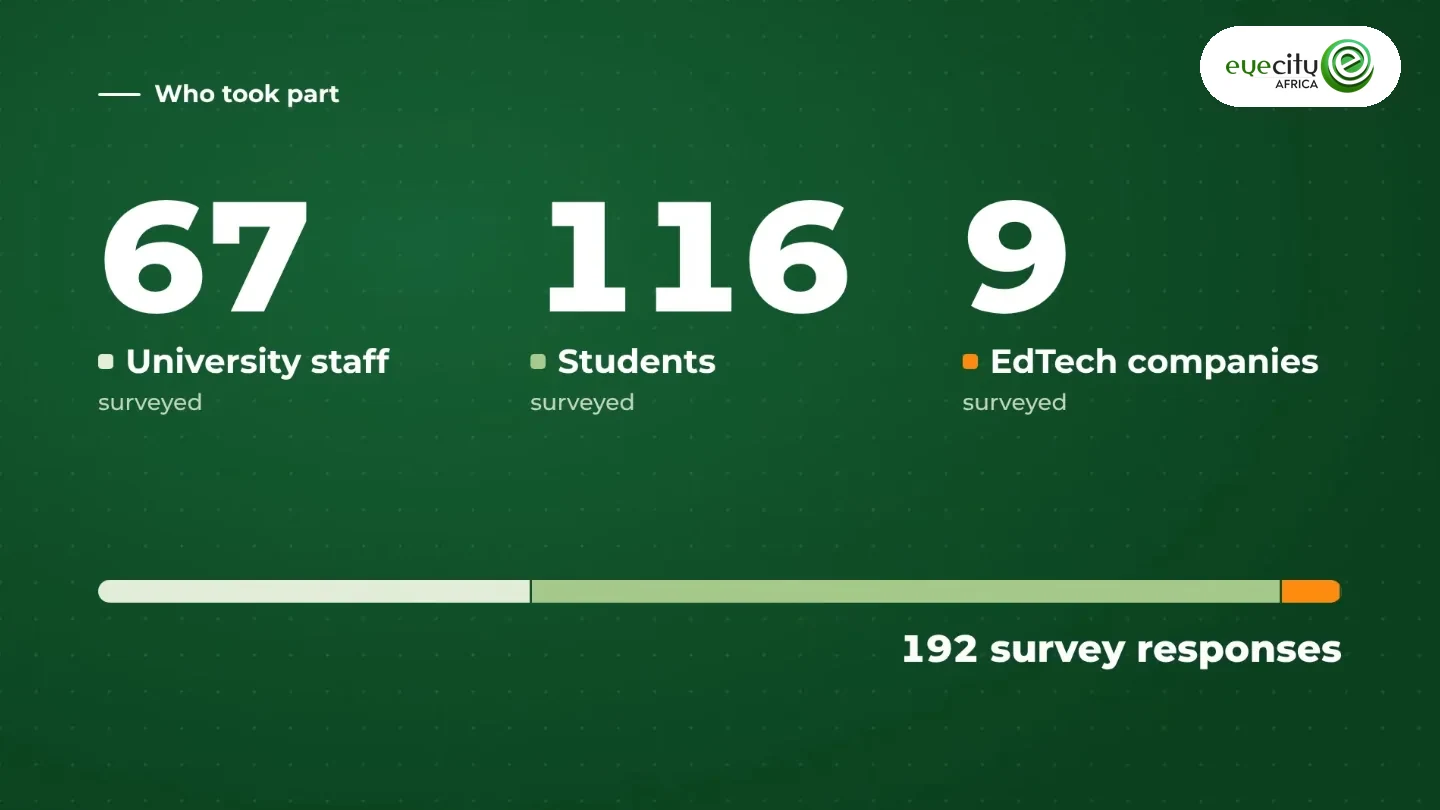
We combined surveys and in-depth interviews to hear from the people who lead, teach, learn and build technology in African higher education. We surveyed university staff, students and EdTech companies, and interviewed university leaders, e-learning directors, government agencies, and development and international partners.
Key Findings
The research identified six thematic areas:
Universities are in transition. Digital systems are in place, and progress is real, but uneven. 68% of university staff rate digital maturity in their region as moderate.
The classroom is the next frontier. Administration has gone digital faster than teaching and learning.
Lecturer readiness drives digital transformation. Faculty readiness is the most cited barrier, and only 22% of staff describe faculty as fully prepared. Peer learning and continuous professional development are key to closing the gap.
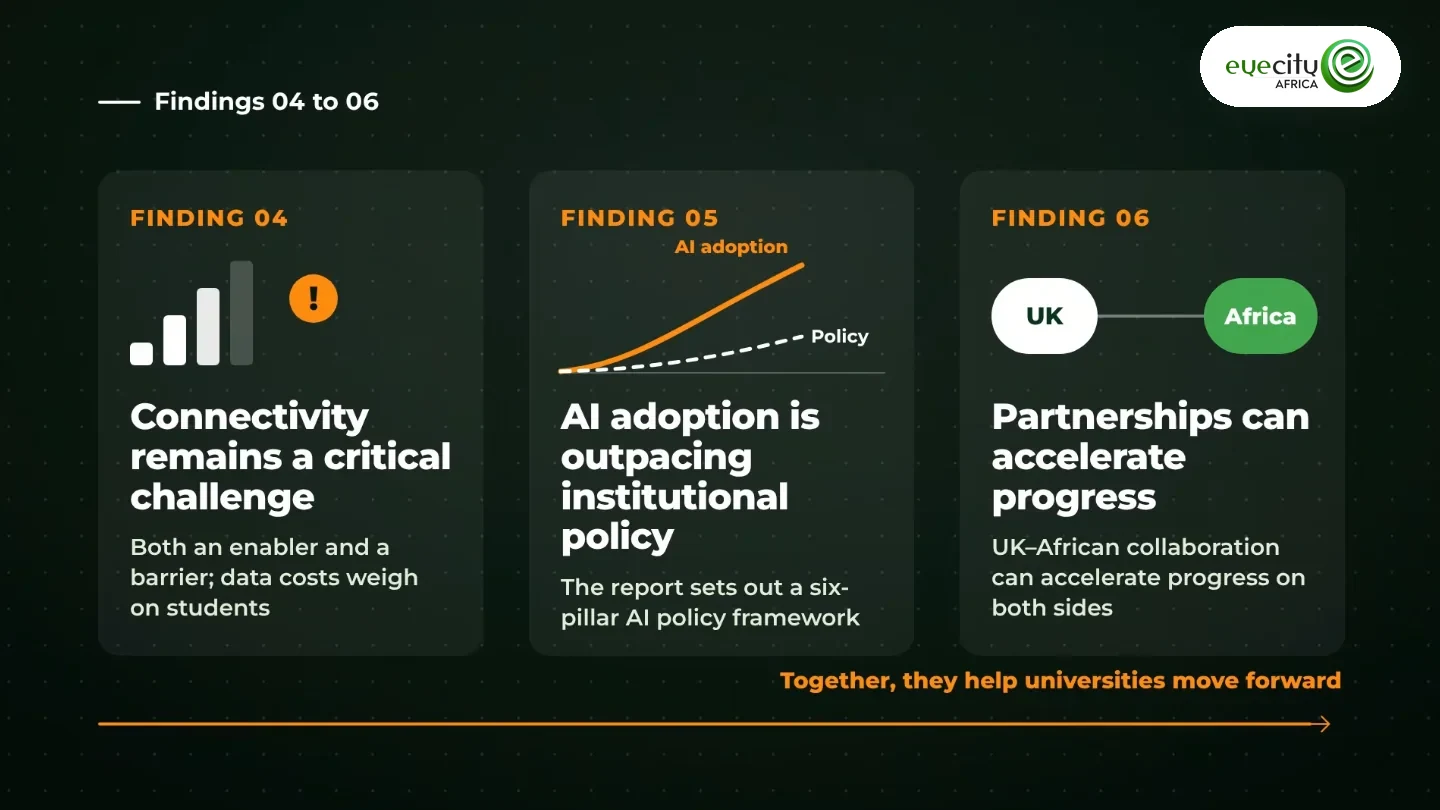
Connectivity remains a critical challenge. It is both an enabler and a barrier, and internet and data costs are the barrier students cite most in all four countries.
AI adoption is outpacing institutional policy. Most students use generative AI tools, and many lecturers are setting their own rules.
Partnerships, including those between UK and African institutions, can speed up progress.
Recommendations
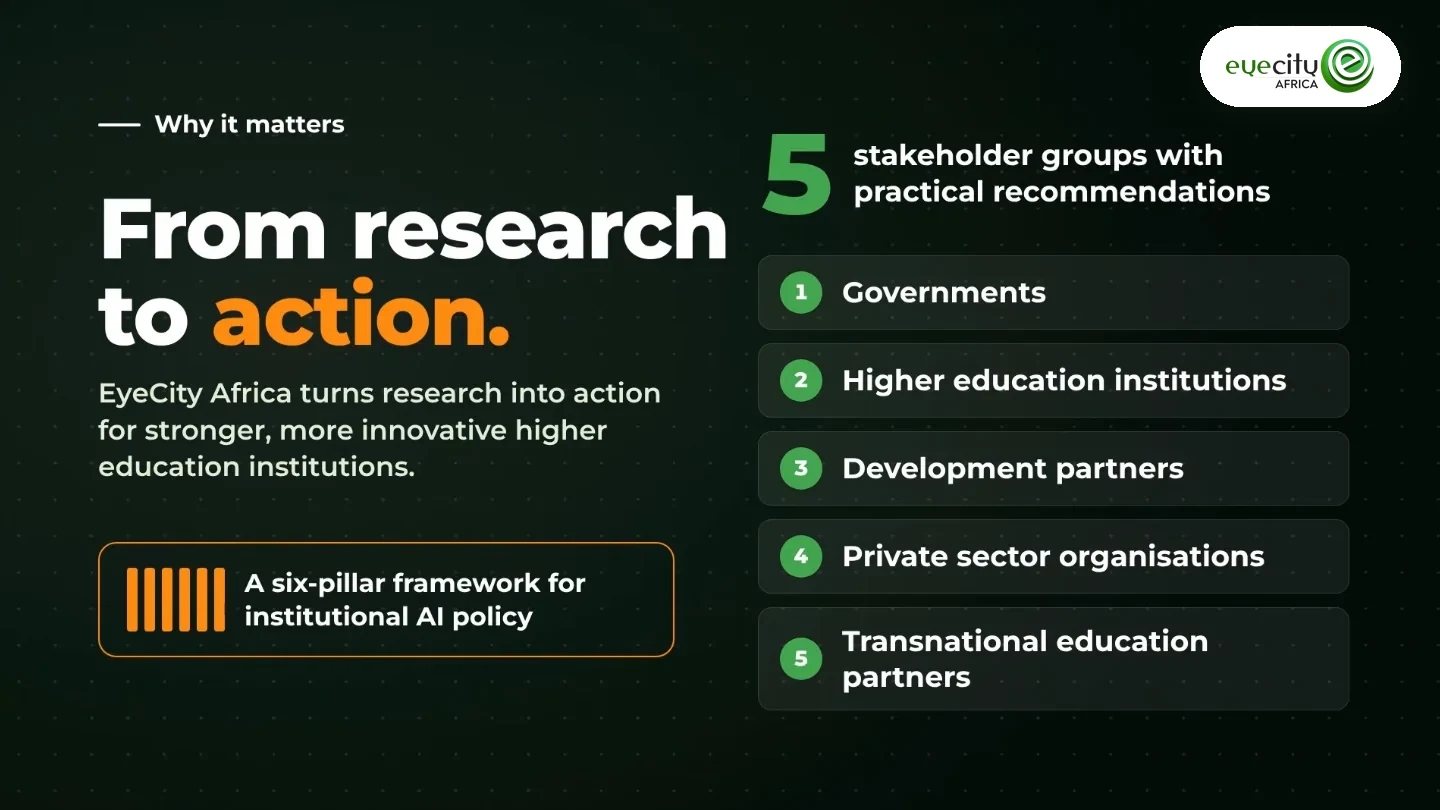
The report sets out practical recommendations for five stakeholder groups: governments, higher education institutions, development partners, private sector organisations and transnational education partners. Key recommendations include:
Governments: treat National Research and Education Networks (NRENs), campus electricity and affordable data as a public good.
Higher education institutions: make digital transformation a leadership priority and invest in year-round, discipline-specific lecturer training.
Development partners: tailor funding to each institution’s level of digital maturity and support peer learning networks.
Private sector: embed EdTech in formal curricula and build low-bandwidth, mobile-first tools.
Transnational education partners: co-design programmes and fund ongoing lecturer training at both UK and African partner institutions.
It also proposes a six-pillar framework to guide institutional AI policy. The six pillars are:
Scope and permitted use: define which AI tools are permitted, conditional or prohibited in teaching, assessment, research and administration.
Academic integrity and assessment: require AI disclosure, set graduated consequences for misuse and use applied tasks that resist AI substitution.
Teaching, learning and research: guide acceptable AI use and train staff in AI pedagogy.
Data governance and sovereignty: require data processing agreements with third parties, local hosting where feasible and clear intellectual property terms.
Algorithmic bias and equity: assess equity impacts before using AI in areas such as admissions or student support.
Review and governance: set up a standing AI governance mandate with annual reviews and rapid-response protocols.
Report Launch and Stakeholder Dialogue
On 29 October 2026, we launched the report virtually with the British Council. Meekness Lunga, Regional Higher Education Director, Sub-Saharan Africa at the British Council, gave the opening remarks. Ayomide Omotoso, Senior Research and Project Coordinator at EyeCity Africa, presented the findings. Omotayo Abraham, Associate Director at EyeCity Africa, then moderated a panel with Elizabeth Newall (Jisc), Dr Akanimo Odon (Lancaster University) and Faiz Bashir (FlexiSAF) on what the findings mean for the future of higher education in Africa.
Impact
Produced cross-country evidence on digital transformation in higher education across Ghana, Kenya, Nigeria and South Africa, drawn from surveys and in-depth interviews with university staff, students, EdTech companies, institutional leaders and partners.
Gave governments, universities, development partners, the private sector and transnational education partners practical recommendations, along with a six-pillar framework for institutional AI policy.
Brought together higher education and EdTech voices from Africa and the UK to discuss the findings and next steps at a public launch.